Why Anti-Choking Devices Like LifeVac and Dechoker Are Not Permitted in Irish Childcare Settings
If you work in an early years setting, run a crèche, or if you are First Aider, you have likely seen anti-choking devices being promoted online or even donated to schools and childcare services. Devices like the LifeVac and Dechoker are heavily marketed as life-saving tools for choking emergencies — and at first glance, they seem like a sensible addition to any first aid kit. But Irish health and regulatory authorities are clear: these devices are not permitted in any work environment in Ireland and in early years services Tulsa have come out to say they should not be used as their use is not supported by the clinical evidence.
Here is what you need to know.
What Are Anti-Choking Devices?
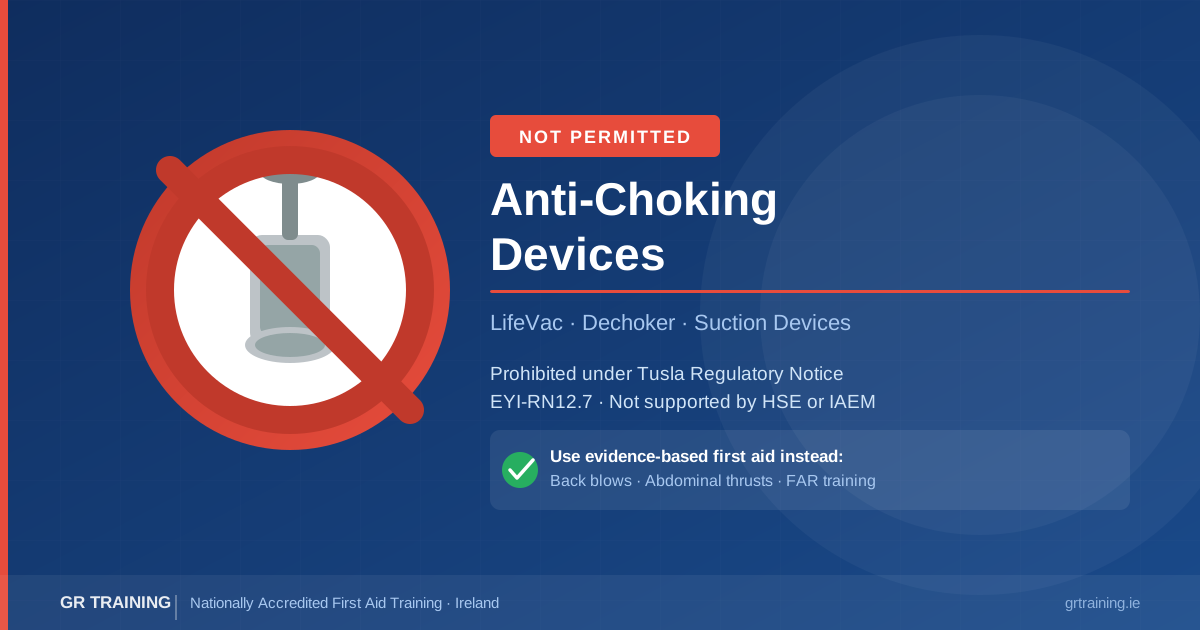
Anti-choking devices — sometimes called “human plungers” — are suction-based tools designed to create negative pressure in the airway and dislodge a foreign body obstruction. The most widely marketed brands in Ireland include:
- LifeVac — a mask-and-plunger device that creates suction over the mouth and nose
- Dechoker — a similar suction device with a mouthpiece and handle
- Other generic suction-based devices sold online and in pharmacies
These products are commercially available in Ireland, are often low in cost, and their manufacturers make compelling claims about their effectiveness. It is understandable that concerned parents, childcare workers, and school staff want to have every possible tool available in an emergency. But good intentions are not enough — what matters is the evidence, and that is where these devices fall short.
What Irish Regulatory and Health Bodies Say
Tusla — Child and Family Agency
This is the most important point for anyone working in regulated childcare. Tusla’s Early Years Inspectorate issued Regulatory Notice EYI-RN12.7 (updated June 2026), which sets out an unambiguous position:
“Anti-choking devices are prohibited for use in early years services.”
The notice requires that registered childcare providers remove any existing anti-choking devices from their premises immediately. Inspectors will look for compliance with this notice as part of the regulatory inspection process. Non-compliance is treated as a serious matter.
The reasoning behind this prohibition centres on two key concerns: the lack of sufficient research on the safety and effectiveness of these devices, and the risk that using them could delay the delivery of established, evidence-based first aid interventions.
HSE — Health Service Executive
The HSE has been advising the public against the use of anti-choking devices since 2022. Their guidance is direct:
“Do not use anti-choking devices if your child is choking.”
The HSE’s position is that there is not enough research on how well these devices work or how safe they are, and that using them could delay proper treatment at a critical moment.
IAEM — Irish Association for Emergency Medicine
In March 2023, the Irish Association for Emergency Medicine (IAEM), alongside the Emergency Medicine Programme, issued a formal statement opposing the use of suction-based airway clearance devices. Their statement confirmed that the IAEM “does not currently support their use due to the lack of research on the safety or effectiveness of these devices” and expressed concern that they “could delay established treatments for choking.”
PHECC — Pre-Hospital Emergency Care Council
PHECC, which sets the standards for pre-hospital emergency care and first aid training in Ireland, does not include anti-choking devices in its Clinical Practice Guidelines or first aid training syllabi. This means that any first aid course that teaches or endorses the use of these devices is operating outside of the national standards framework.
The Core Problem: No Clinical Evidence, Real Risk of Harm
The marketing behind devices like LifeVac is persuasive, and anecdotal stories are powerful. But the medical and regulatory community requires something more: robust, peer-reviewed clinical evidence demonstrating that a device is both safe and effective before it is included in emergency care guidelines.
That evidence simply does not exist for anti-choking devices in any meaningful form. There are no randomised controlled trials. The case reports shared by manufacturers are not subject to independent verification. And critically, there is no data on how these devices perform compared to doing nothing — or compared to the established techniques.
Beyond the lack of evidence, there is an active risk: using a device takes time. In a choking emergency, every second counts. If a caregiver reaches for an anti-choking device, fumbles with the mask, attempts to create a seal, and fails — that is time that could have been spent delivering back blows that might have cleared the obstruction in moments.
What You Should Do Instead
The good news is that there are effective, evidence-based techniques for managing a choking emergency — and they require no equipment at all.
For infants under 1 year:
- 5 back blows followed by 5 chest thrusts, alternating until the obstruction is cleared or the infant becomes unresponsive
For children over 1 year and adults:
- 5 back blows followed by 5 abdominal thrusts (the Heimlich manoeuvre), alternating until the obstruction clears or the person becomes unresponsive
Always call 999 or 112 if the person loses consciousness or the obstruction cannot be cleared.
These techniques are taught as part of First Aid Response (FAR) training, which is the nationally recognised standard for childcare settings. The national regulatory framework requires that at least one person with current FAR certification is present and available at all times.
The Bottom Line for Childcare Providers and First Aiders
If you work in a crèche, early years setting, or childcare service in Ireland:
- Remove any anti-choking devices from your premises — they are prohibited under Tusla Regulatory Notice EYI-RN12.7
- Do not incorporate them into your first aid procedures or training
- Ensure your staff have current, accredited FAR training — this is a Tusla requirement, not optional
- Trust the evidence: back blows and abdominal thrusts work, require no equipment, and can be initiated immediately
If you are a parent or first aider, the same advice applies. The best thing you can do to protect a child in a choking emergency is to learn the correct techniques from an accredited first aid course and practise them regularly — not to rely on a device that has not been validated by clinical research and is not supported by Irish health authorities.
Get Trained by Qualified Professionals
At GR Training, we deliver nationally accredited first aid training that is fully aligned with PHECC guidelines and Tusla’s requirements for early years services. Our courses cover paediatric and adult choking management using techniques that actually work — and that you can perform confidently without any equipment.
If your team’s FAR certification needs to be renewed, or if you are setting up a new childcare service and need to meet your regulatory obligations, we can help.
[Contact us today to book your next first aid training course →]
Sources and further reading:
- Tusla Early Years Inspectorate — Regulatory Notice EYI-RN12.7 (2026)
- IAEM / Emergency Medicine Programme — Statement on Choking Rescue Devices (March 2023)
- HSE — Choking in children: advice for parents
- Irish Times — Anti-choking devices donated to schools despite HSE advising against use (December 2024)